Ice dams and winter roof leaks in Cincinnati
NOAA county climate files for the Cincinnati area show about 5,000 heating degree days a year and an average January low near 23 degrees. That is enough freeze and thaw for ice dams on houses that leak heat into the attic, which describes a lot of older Cincinnati housing.
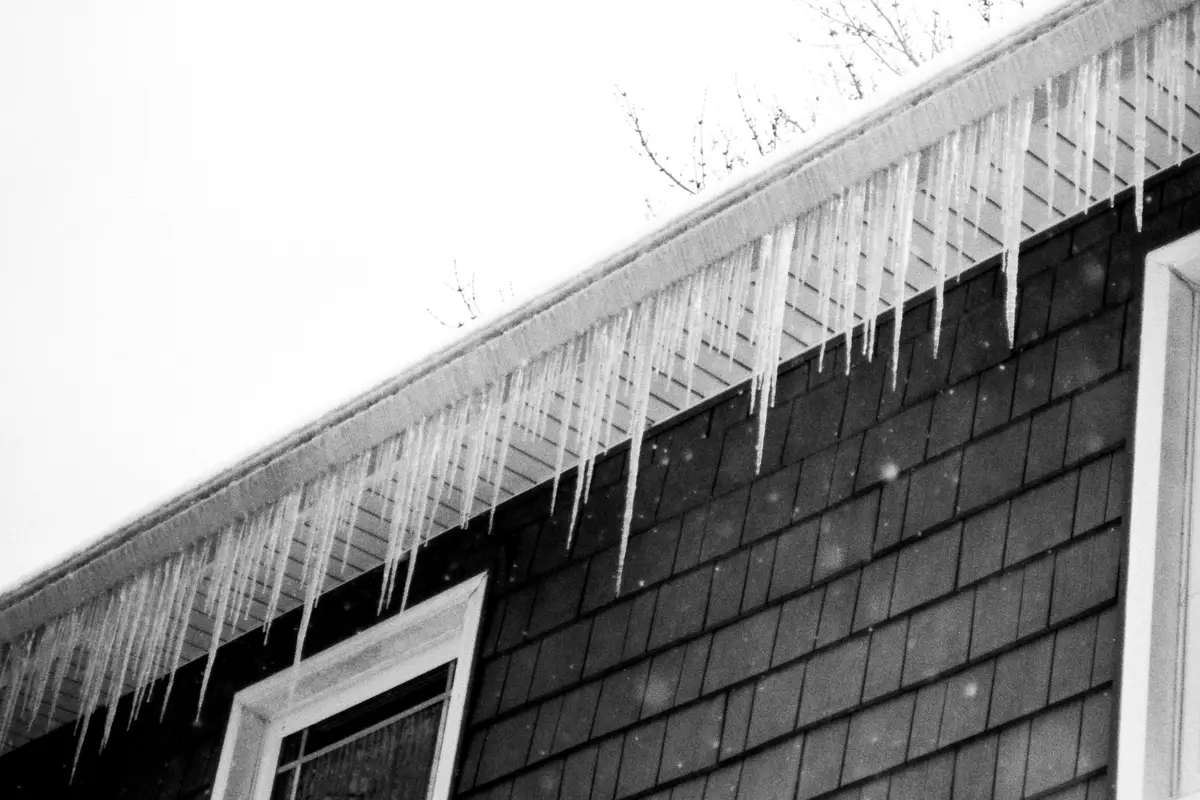
How an ice dam forms
Heat from the house warms the roof deck. Snow on top melts and runs down to the cold eave, where it freezes again. The ridge of ice grows, and the next melt pools behind it and backs up under the shingles. The leak shows up on a ceiling near an outside wall, often on a sunny day after a snow.
What helps now
- Clear snow from the lowest few feet of the roof with a roof rake from the ground.
- Keep downspouts open so meltwater has somewhere to go.
- Do not chip ice off shingles or slate; it breaks them.
What fixes it
- Air sealing the attic floor so house heat stays in the house.
- Insulation above the ceiling.
- Ventilation from soffit to ridge so the deck stays cold.
- Ice and water barrier along the eaves at the next reroof.
- Gutters that drain. Built-in box gutters that hold ice are a common winter leak on prewar houses. More on box gutters.
Questions people around Cincinnati ask
Are icicles a sign of an ice dam?
Big icicles along the gutter mean meltwater is refreezing at the eave, which is how ice dams form. Watch the ceiling below them after the next thaw.
Will heat cables stop ice dams?
They can keep a channel open in a problem spot, and that is all. The cause is heat reaching the roof deck, which air sealing and insulation fix.